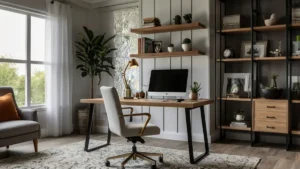
A sensory environment designed for flow, clarity, and the thinking mind
What It Is
Most home offices are afterthoughts. A desk pushed against a bedroom wall, a dining table repurposed, a converted cupboard. The materials in these spaces were chosen for something else entirely. The Mindful Studio asks a different question: what if the room itself supported the way you think?
We focus here on acoustic absorption, the ability of a material to soak up sound waves and reduce echo and distraction. Cork, wood fibre, and clay each contribute to a room where the ear can rest, where background noise drops, and where the mind can settle into sustained attention. The Japanese concept of mushin (無心, the mind without mind) describes the state of absorbed, unself-conscious focus that martial artists and craftspeople cultivate. It’s also what most of us call “being in the zone.” A thinking space should support that state, not fight against it.
A workspace doesn’t need to be clinical to be effective. The best ones act as sensory buffers: materials that regulate humidity, soften sound, and diffuse light, so the body can settle while the mind works.
Inspiration
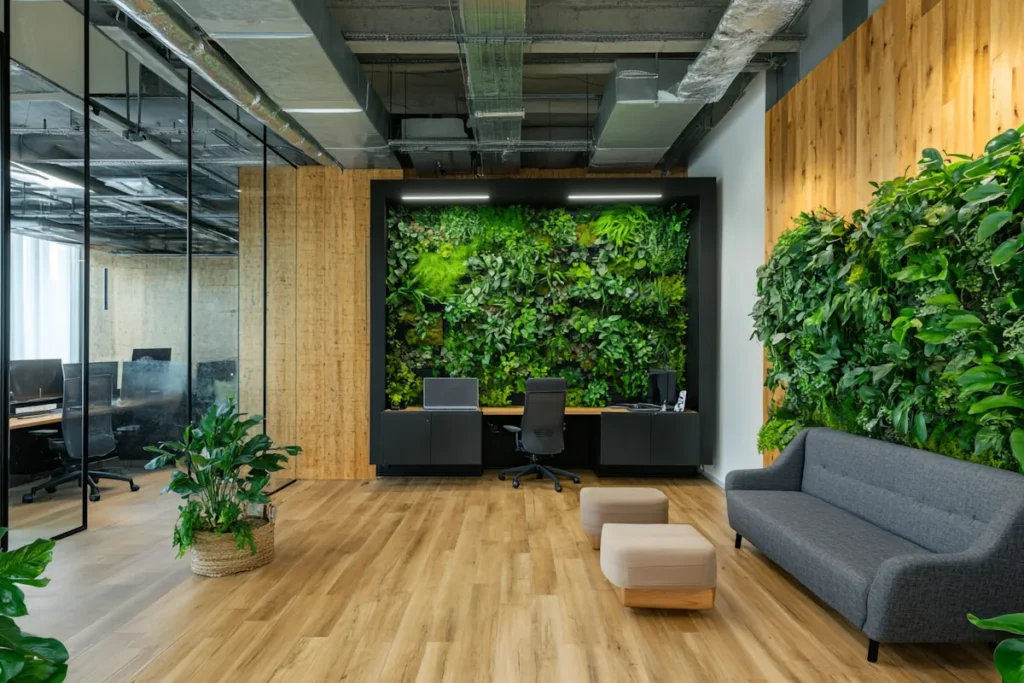

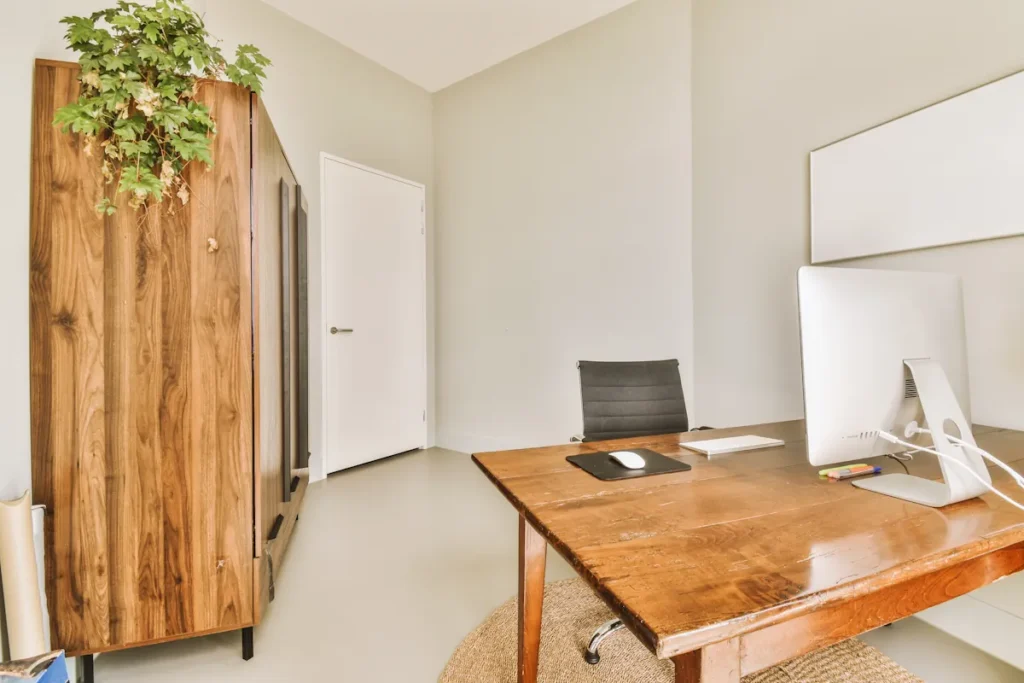
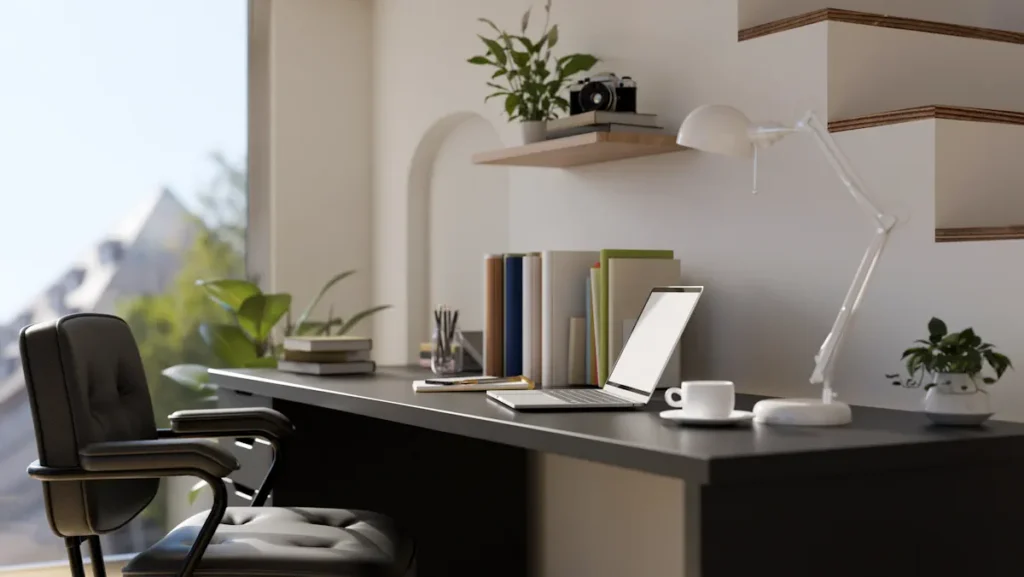
The Working Palette
Cork wall tiles: Cork is the primary material for focus. Its cellular structure traps air, which gives it an NRC (noise reduction coefficient, a measure of how much sound a material absorbs rather than reflects) of around 0.15–0.30 for standard tiles, rising to 0.40 or higher for thicker panels. When we installed 12mm cork wall tiles in a small attic office, the reduction in echo during video calls was immediate; the audio feedback that had made calls uncomfortable for two years disappeared within an afternoon. Cork is also a carbon-sequestering material, harvested from the bark of living trees without felling them.
Pale clay paint: Light-diffusing and hygroscopic (meaning it absorbs and releases moisture from the air). Clay in soft off-white tones reflects light evenly across the room, reducing the eye strain that comes from hours at a screen. Its moisture-buffering properties keep the air from feeling stale during long working days. Clay paint verified to EN 16516 releases zero VOCs.
Wood fibre insulation: Used behind walls or as exposed acoustic panels between rafters. Wood fibre provides both thermal and sound insulation, creating a room that feels separated from the rest of the house. Free from formaldehyde binders and halogenated flame retardants.
Solid birch or ash: Lighter woods that feel clean and alert. Birch has a fine, even grain with a pale tone that reads as energising without being cold. Ash offers a slightly more open grain with gentle warmth. Both provide smooth surfaces for hands and forearms to rest on during long working sessions.
How It Feels
Alert. That’s the first word most people reach for. A Mindful Studio with cork, clay, and wood fibre feels like the difference between a busy café and a quiet library.
Air stays fresh because the walls are breathing. Humidity holds steady, typically between 45–55% when clay paint and wood fibre are working together, which means fewer dry-throat mornings or stuffy afternoons. The room stays at a more stable temperature because wood fibre moderates heat transfer. Less time adjusting the thermostat, more time in the work itself.
Mushin, that state of absorbed focus, becomes easier to reach in an environment that’s stopped creating low-level distraction. Echoes resolved. Air balanced. Light diffused. The room recedes, and the work comes forward.
First Steps
Address the acoustics. A single wall of cork tiles can shift the entire character of a workspace. It’s a weekend project with visible and audible results. Start with the wall behind or beside your monitor, where sound reflects most directly back toward you.
Light the walls, not only the desk. Use clay paint in a soft off-white to create a luminous backdrop. Dark walls behind a bright screen create the harsh contrast that leads to eye fatigue. Pale clay walls scatter light gently, reducing that effect.
Think about what your skin touches. Your desk surface, your chair, the floor beneath your feet. A solid wood desk and natural flooring (cork, wood) give the body grounding signals that laminate and synthetic carpet don’t. Small change, noticeable effect over an eight-hour day.
Common Questions
Why is cork better than synthetic acoustic foam for a home office?
Cork absorbs sound while also insulating, regulating humidity, and sequestering carbon. Acoustic foam does one job; cork does four. Cork also ages well in a domestic setting (it looks like bark, not a recording studio) and releases no VOCs. Synthetic foams can off-gas for weeks after installation.
Does clay paint help with concentration?
Indirectly, yes. Clay’s moisture-buffering keeps humidity stable, and fluctuating humidity is a common cause of fatigue and stuffiness in enclosed rooms. Stable air doesn’t guarantee focus, but unstable air reliably undermines it.
Can I use The Mindful Studio approach for a creative studio or workshop?
The neutral, textured palette works well as a backdrop for colour-sensitive work. Photographers, painters, and textile workers often prefer natural, non-reflective surfaces because they create fewer competing visual signals. The acoustic benefits also help when recording or mixing audio.
Is it expensive to treat a room acoustically with natural materials?
Less than you might expect. A few square metres of quality cork tile (typically €30–60 per m²) can treat the most problematic wall. Wood fibre panels are comparable. Both are often more effective and more affordable than complex synthetic systems, and they contribute thermal insulation alongside acoustic performance.