
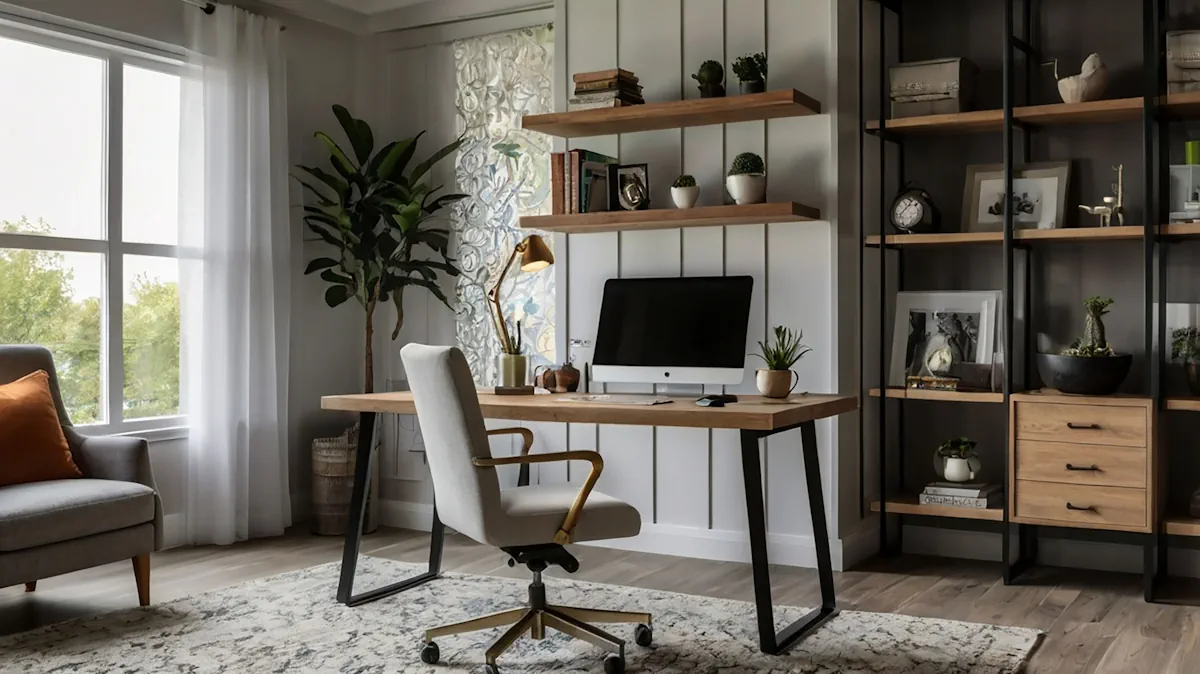
A healthier workspace starts with the room you already have, not the one you’d build from scratch — the actual floor, the actual walls, the actual corner you sit in this morning. The first move isn’t a redesign. It’s choosing whichever of those bothers you most and fixing it before anything else.
Quick Takeaways
- Start with whatever bothers you most; you don’t need to address everything at once
- Your workspace doesn’t need to be a dedicated room to benefit from better materials
- Small, targeted changes compound into a meaningfully different working environment
Three Common Workspace Types
Three workspace types come up again and again in homes set up for remote work. Each has a different starting point, and each rewards a different first move.
The spare bedroom. A dedicated room, often small (around 9 m²), often north-facing, with plasterboard walls, laminate floor, and a roller blind. The familiar complaints are afternoon fatigue and echo on calls. A reasonable plan: clay paint on the four walls (a weekend project), cork tiles on the wall behind the monitor (half a day), a wool rug under the desk, and the habit of opening the window for five minutes each hour. The improvements compound — paint lifts the ambient light, cork softens the call audio, the rug warms the floor underfoot.
The kitchen table. No dedicated room. A section of kitchen island commandeered after breakfast, cleared before dinner. The constraint is straightforward: nothing permanent, everything removable. What helps here is portable — a wool felt desk mat (acoustic dampening plus tactile warmth), a clip-on desk lamp at 4000K for working hours, and opening the kitchen window during the morning shift. Less dramatic than a refitted room, but the felt mat alone changes how the desk surface feels under hands and forearms.
The attic nook. Half-converted loft space, sloped ceiling, dormer window. Wood fibre insulation visible between rafters. In a setup like this, much of the hard work is already done — those exposed wood fibre panels absorb sound, insulate heat, and buffer humidity. The remaining work is refinement: a birch plywood desk in place of an MDF one (VOC reduction plus tactile improvement), and a pendant light aimed at the sloped wall for indirect ambient lighting. The room is already working; it needs tuning, not overhaul.
Your Priority List
If you can do one thing: open a window. Ventilation addresses the single biggest workspace problem (CO₂ build-up) with zero cost and immediate effect.
If you can do two things: add window ventilation and treat the wall behind your screen. Clay paint (if you’re repainting anyway) or cork tiles (if you want acoustic improvement too). Both improve light quality. Cork adds sound absorption.
If you can do three things: add a wool rug under your desk area. It softens the floor acoustically, warms your feet, and makes the workspace feel like a place you’ve chosen to be.
Beyond that, everything is refinement. Better desk lighting. A solid wood desk surface. Linen blinds. A plant on the windowsill. Each addition layers benefit on benefit. Take it at whatever pace suits your budget and energy.
Respecting Constraints
Not everyone has a spare room. Not everyone can paint walls. Not everyone has budget for cork tiles. That’s real, and it doesn’t disqualify you from improving your workspace.
Portable changes matter. A wool rug rolls up. A desk lamp moves. Linen curtains hang from a tension rod. A felt desk pad travels between rooms. These aren’t compromises; they’re targeted improvements that work within the life you actually have.
And if you do have a dedicated room, resist the urge to do everything at once. Renovate like you’d furnish: one piece at a time, each chosen for a reason, each given a chance to settle before you add the next.
Products to Explore
Clay paint for workspace walls (Auro, Kreidezeit, Earthborn). Cork wall tiles for acoustic and visual improvement. Wool desk mats and felt panels for portable acoustic treatment. Solid birch or ash desk surfaces. Tuneable LED desk lamps. Dense wool rugs with felt underlay.
Common Questions
What order should I prioritise workspace changes?
Ventilation first (free). Then the wall behind your screen (paint or cork). Then acoustics (rug, textiles). Then desk surface. Then lighting. This sequence addresses problems in order of cognitive impact.
Can natural materials help with video call quality?
Yes. Cork or wool behind and around your desk reduces echo, which directly improves audio clarity. A pale matte wall behind your face reflects light evenly for better video. These are the two most common complaints about home video calls, and both have material solutions.
Is it worth investing in a dedicated home office?
If you work from home three or more days a week, yes. The cognitive and health benefits of a well-considered workspace pay for themselves in focus, comfort, and reduced strain. Even a small, dedicated space (5–6 m²) benefits from material attention.
What if I share the workspace with someone else?
The same principles apply, doubled. Two occupants produce more CO₂ (ventilate more often), more sound (acoustic treatment matters even more), and may need different lighting. Shared workspaces benefit most from wall treatment and good ventilation, which help both occupants simultaneously.