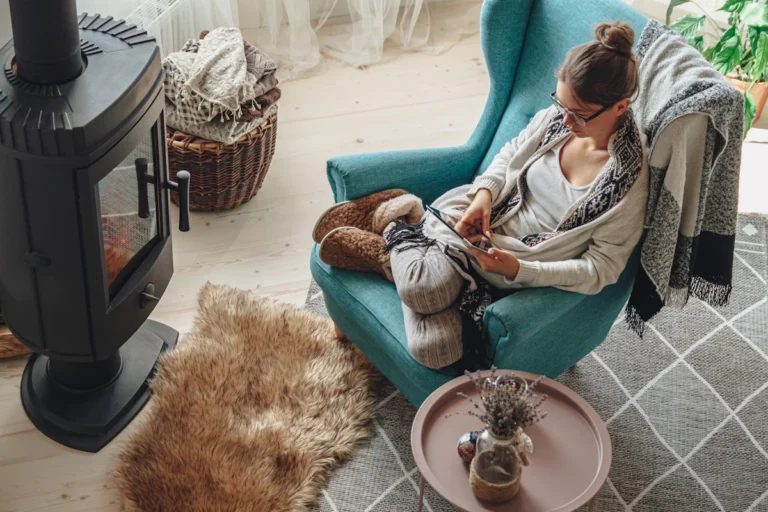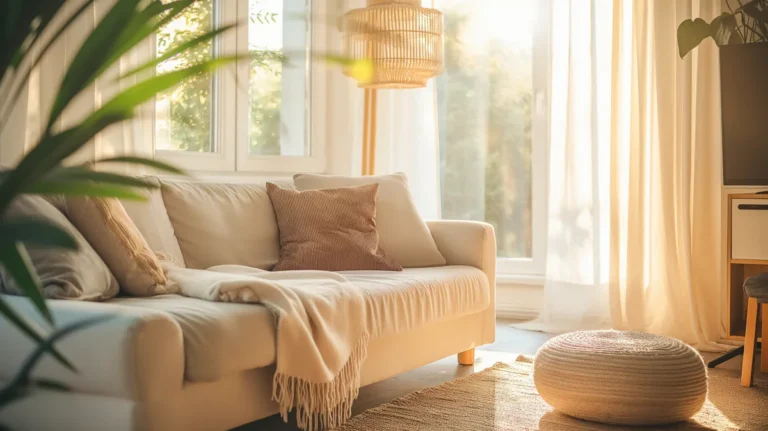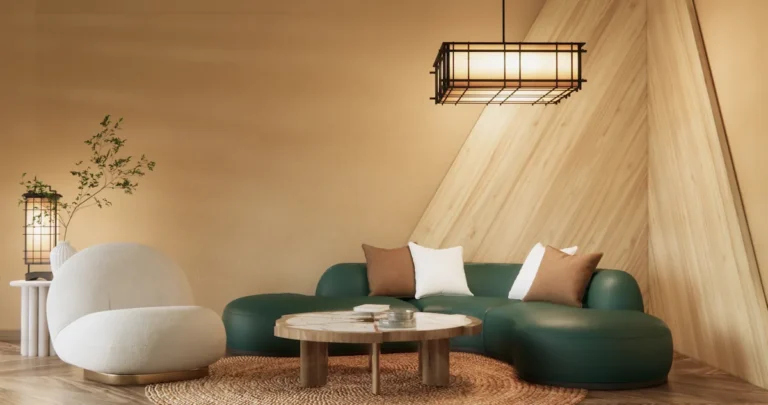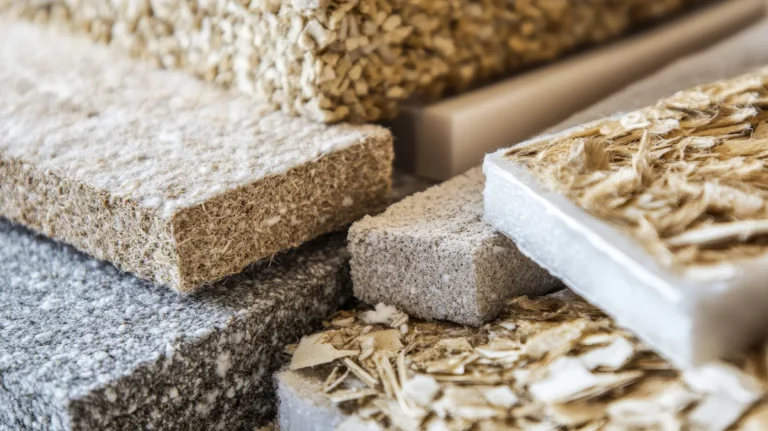
Light, colour, and sensory experience shape how a room feels long before you consciously register why. A bedroom with warm, muted tones and soft textures works differently on your nervous system than a bright white box with hard surfaces. The materials you choose affect all of this: how light bounces, what you hear, what you touch. Natural materials tend to scatter light gently (lime plaster, for instance, has a soft luminosity that painted plasterboard can’t match). They absorb sound. They have temperature and texture under your hands.
These articles look at the sensory dimension of your home. Light and Natural Surfaces examines how material choice changes the quality of light in a room. Colour Without Chemicals explores natural pigments as an alternative to synthetic dyes. And What Makes a Room Feel Calm brings sensory design together into something you can act on. Good design engages more than the eyes.