Where every surface supports your wellbeing, and the air itself feels like home
What It Means
You breathe 15,000 litres of air every day. Most of it, indoors. The surfaces surrounding you (walls, floors, furniture, finishes) are active participants in the atmosphere you inhabit, either releasing compounds into your air or helping to purify it.
Every material in a Breathing Space is chosen for what it does to the air you breathe. Walls that genuinely breathe. Humidity that regulates itself. The absence of harmful chemicals verified by independent testing, not just claimed on a label.
And this doesn’t require a sterile environment or anxious material-avoidance. It means choosing surfaces that work with your body, that contribute to your wellbeing. The result is a space that feels different in ways you might not immediately name, but your body recognises. Cleaner air. More stable humidity. The subtle sense that the space itself is supporting you.
Inspiration
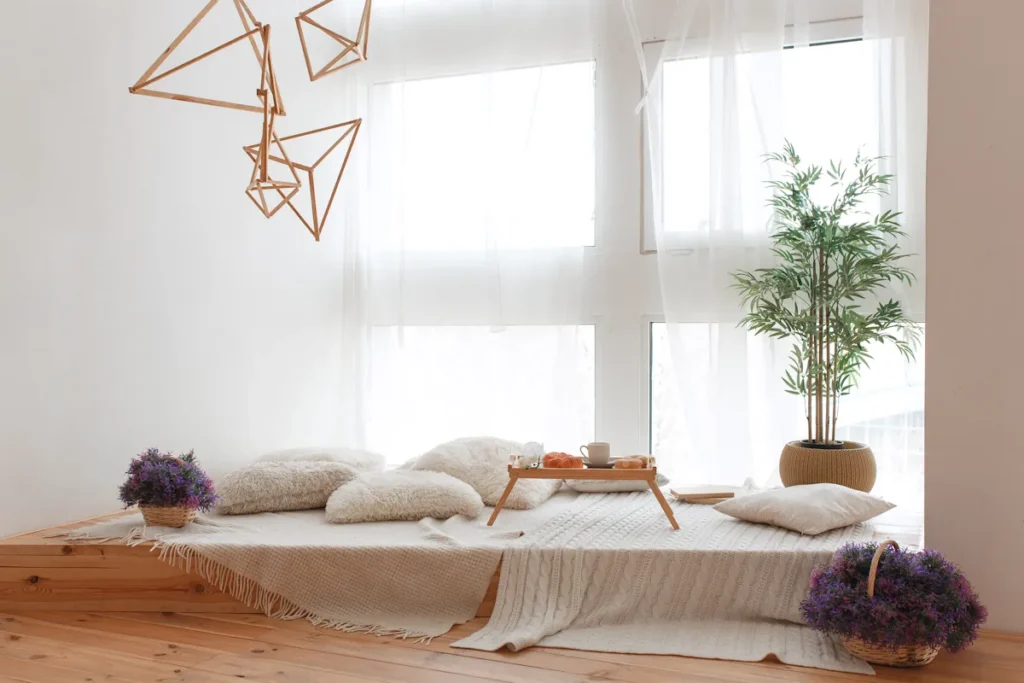
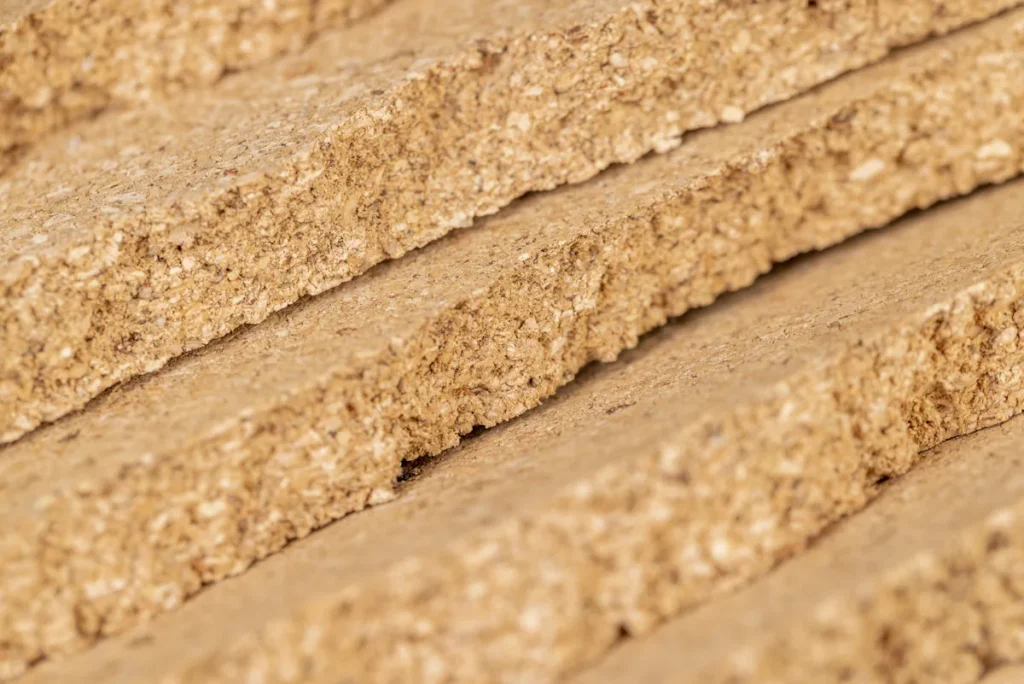
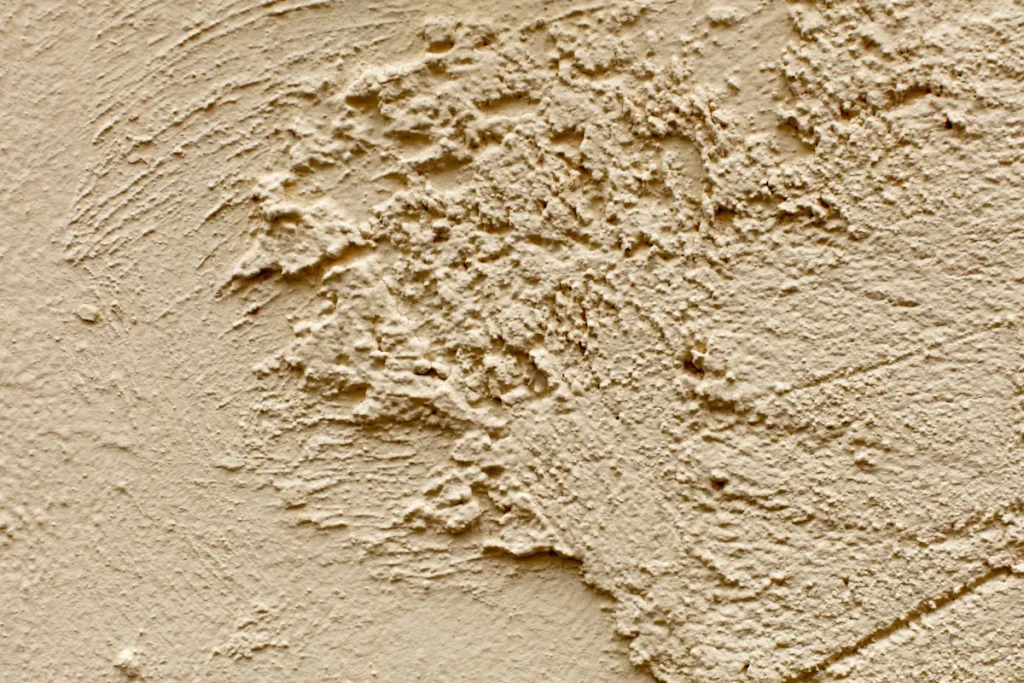
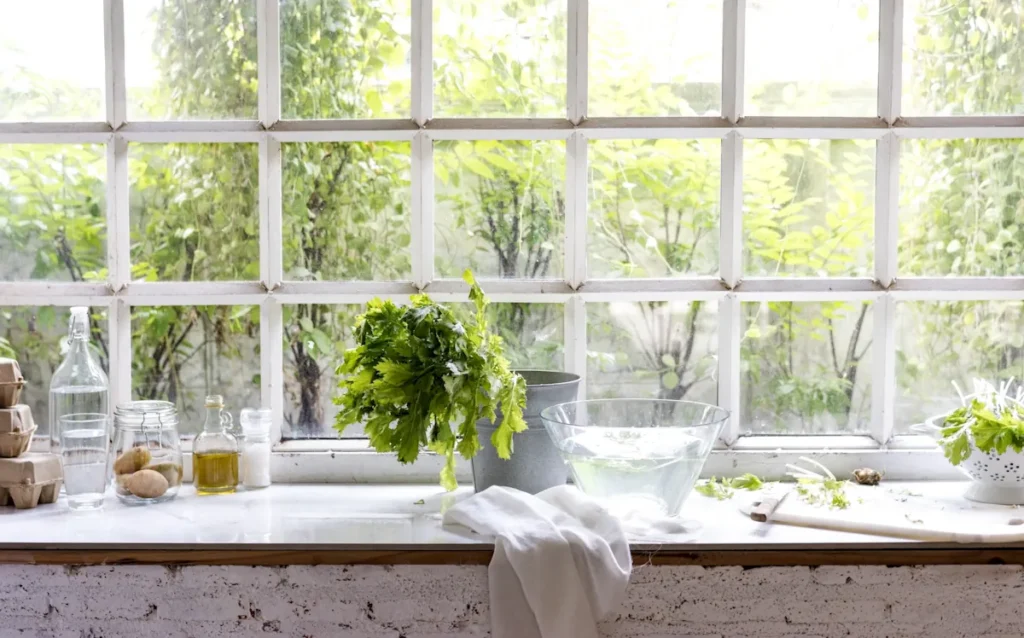
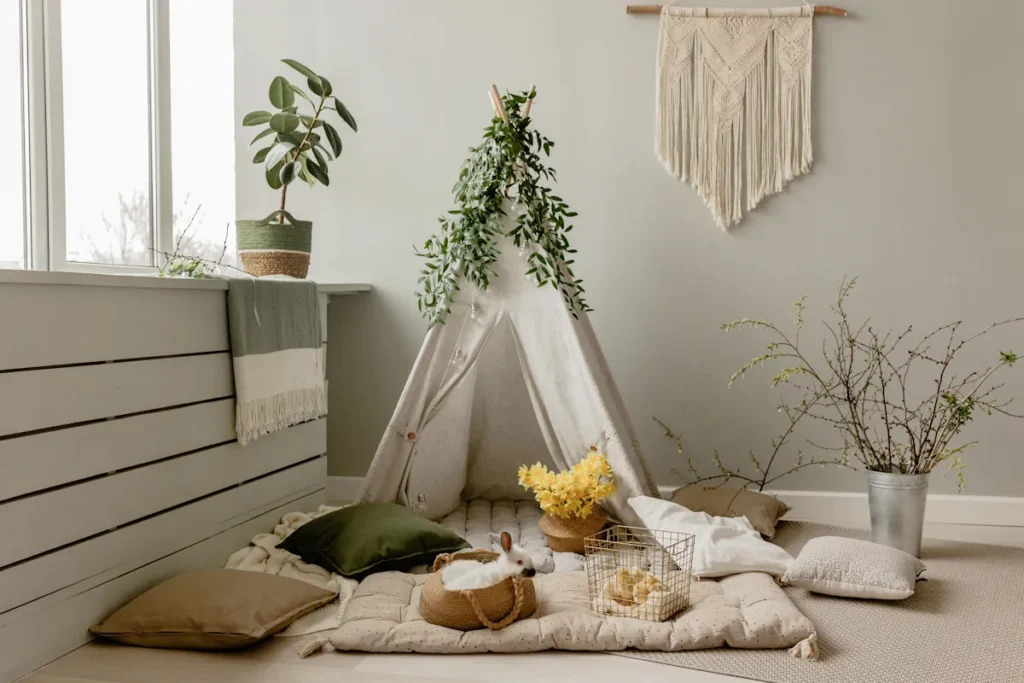
Material Palette
The materials of a Breathing Space are chosen for their health credentials: what they release (nothing harmful), what they absorb (excess moisture and pollutants), and how they’re verified (independent certification).
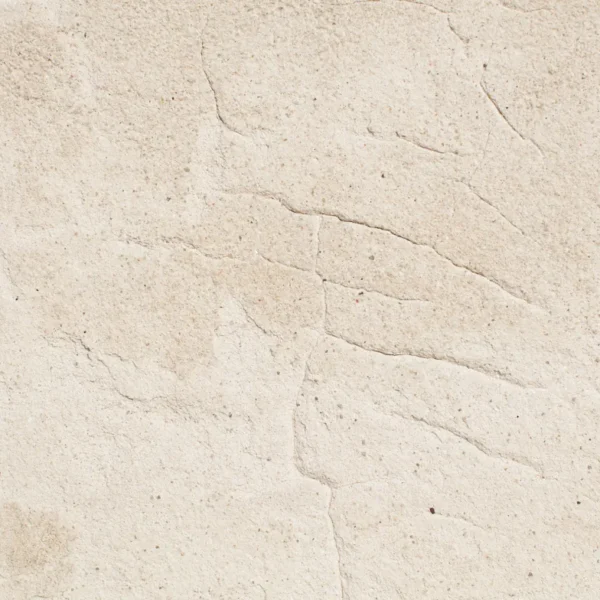
Clay plaster and paint: A hygroscopic material is one that absorbs and releases moisture from the air, buffering humidity changes. Clay does this at up to 30g of moisture per square metre, verified to EN 16516 for zero VOC emissions. The walls become part of your air-management system. In one bedroom we fitted with clay plaster, humidity readings stayed between 45–55% through an entire winter without any mechanical humidifier.
Lime finishes: Antibacterial and mould-resistant by nature. Lime’s high alkalinity creates an inhospitable environment for biological growth. Over time, lime absorbs CO₂ from the air, slowly carbonating back to limestone. A material that improves with age rather than degrading.
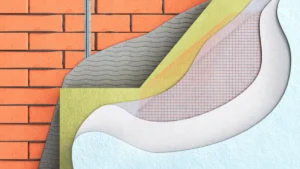
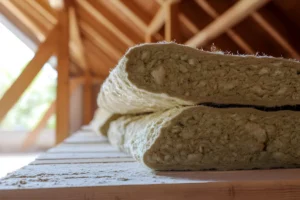
Wood fibre insulation: Free from formaldehyde binders and halogenated flame retardants. Wood fibre’s moisture-buffering capacity prevents condensation in wall cavities, the hidden moisture that leads to hidden mould. Safe to install without respiratory protection.
Solid wood flooring: Unlike engineered alternatives bonded with urea-formaldehyde adhesives, solid wood brings nothing into your home but timber. Finished with natural hard wax oils, it contributes no VOCs to your indoor air.
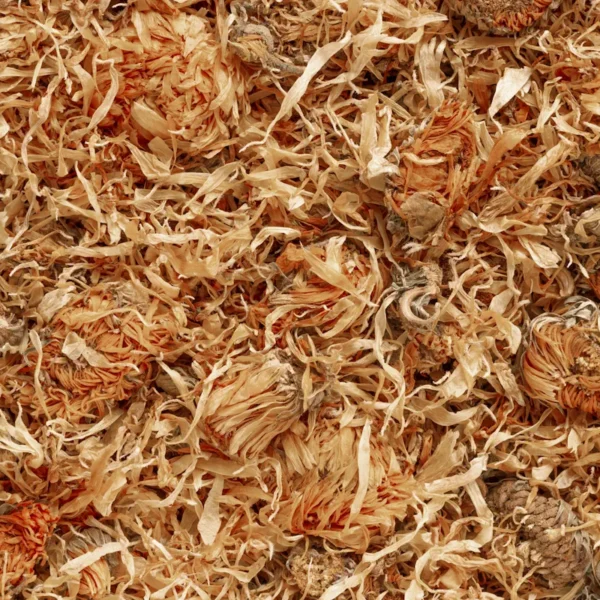
Cork: Antimicrobial and hypoallergenic by composition. Cork resists dust mites, mould, and bacteria without chemical treatment. It also provides thermal and acoustic insulation. Multiple health benefits from a single material.
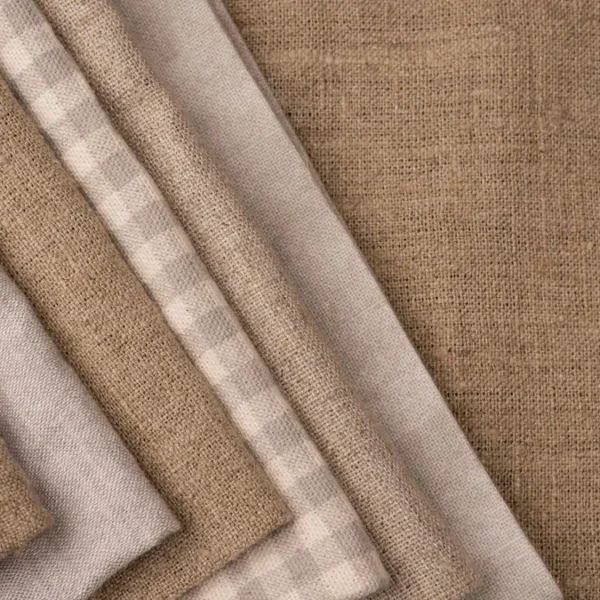
Natural textiles: Organic linen and wool, untreated or processed without harmful chemicals. These materials breathe, regulate temperature, and create no chemical burden. Look for OEKO-TEX certification as a marker of safety.
The Atmosphere
A Breathing Space feels different in ways easier to sense than to describe. The air seems fresher, though you might not consciously notice until you return from a less healthy environment and realise that the slight headache you’d grown accustomed to, the morning stuffiness, the faint chemical edge after unpacking new furniture, were never inevitable features of indoor life. An absence you feel. That staleness many homes carry, the chemical undertone from recent purchases, the overnight stuffiness. Gone.
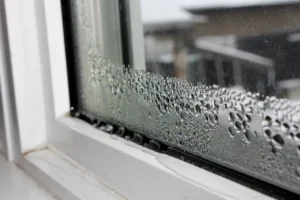
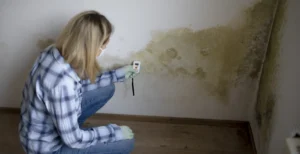
Humidity stays stable. The fluctuations that lead to condensation on windows, to damp corners and mould spots, are smoothed by materials that absorb and release moisture as conditions change. The space self-regulates, requiring less mechanical intervention.
For those with sensitivities (allergies, asthma, chemical intolerances), a Breathing Space can be a genuine turning point. Removing the triggers that other environments contain, replacing them with surfaces that contribute to cleaner air, creates a sanctuary the body recognises as safe.
But you don’t need sensitivities to benefit. Everyone breathes easier in cleaner air. Sleep may improve. Energy may stabilise. The chronic low-level stress of poor air quality, often unrecognised until it lifts, is absent.
How to Begin
Building a Breathing Space means prioritising materials that touch your air most directly. Start where impact is highest.
Address your bedroom first. You spend eight hours breathing bedroom air, much of that time deeply asleep and vulnerable. Clay or lime-finished walls, natural bedding, solid wood or cork flooring: these changes make the most difference in the room where air quality matters most.
Learn to read certifications. GREENGUARD, EN 16516, Declare Label. These markers tell you what’s been verified. “Natural” on a label is a marketing choice; a certification is evidence. Build confidence in reading labels, and you can approach any purchase with clarity.
Improve ventilation alongside materials. Breathable materials work with ventilation, not instead of it. Open windows for even a few minutes daily. Consider the air exchange in each room. Materials manage moisture and buffer air quality; ventilation provides fresh air exchange.
Think about what you’re adding. New furniture, new textiles, new anything can introduce VOCs even after you’ve improved walls and floors. Let new items off-gas outside or in well-ventilated spaces before bringing them into bedrooms or living areas.
Don’t wait for perfection. Every small change helps. A room with clay-painted walls and conventional flooring is healthier than before. A bedroom with natural bedding but standard walls is improved. Progress accumulates. Start anywhere.
Common Questions
How quickly do new materials stop off-gassing?
Most conventional paints and finishes off-gas most heavily in the first few weeks, then continue at lower levels for months. Clay and lime finishes release no VOCs at any point. That’s the core advantage: there’s no waiting period, no “new paint smell” to ventilate away.
Do I need special equipment to test my indoor air quality?
Basic humidity meters (hygrometers) cost under €20 and give you a useful baseline. For VOC testing, professional assessments are available but aren’t essential for most people. Choosing verified-low-emission materials at the outset is more effective than testing after the fact.
Can breathable walls cause damp problems?
The opposite. Breathable walls manage moisture by absorbing and releasing it, which prevents the condensation that causes damp and mould. Problems arise when moisture gets trapped, which happens with impermeable coatings, not with breathable ones.
Is there a noticeable difference between a Breathing Space and a conventionally finished room?
Many people describe the air as “cleaner” or “lighter.” The difference is most obvious after spending time away. Returning to a room with clay-finished walls and solid wood flooring, the air quality is perceptible, especially first thing in the morning.